





As we are now around a month into the new tax year, it is a good time to review the different tax rates and thresholds which may apply to you and your business.
Which tax rates and thresholds have stayed the same?
Corporation Tax: as you may already be aware, the main rate of corporation tax was increased last year from 19% to 25%; this has remained unchanged as we enter this new tax year.
As was the case last year as well, only companies with profits in excess of £250,000 annually will need to pay this 25% rate. Companies with profits annually of less than £50,000 remain able to pay at the 19% rate, while companies with profits between £50,000 and £250,000 will pay an effective rate which falls between the 19% and 25% depending on the level of the company’s profits.
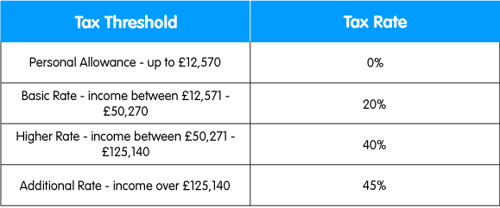
Income tax: there are no changes for the 24-25 tax year when it comes to personal income tax rates or thresholds. Individuals are entitled to a tax-free personal allowance of £12,570 although this will begin reducing once your income exceeds £100,000 – this reduction is at a rate of £1 lost for every £2 earned over the threshold meaning that once your income reaches £125,140 you will not be entitled to any personal allowance amount.
The rates and thresholds have also remained the same for this tax year and are as follows if you live anywhere in the UK with the exception of Scotland:
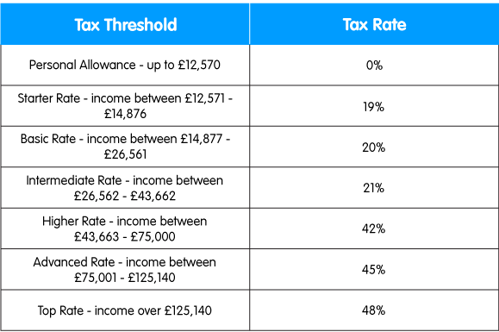
If you do live in Scotland then the rates and thresholds for the 24-25 tax year are as follows:
Which rates and thresholds have changed for the 24-25 tax year?
Dividend tax: for the most part tax on dividends has remained the same as in the last tax year; dividends which fall into the basic rate band are taxed at 8.75%, those which fall into the higher rate band at 33.75% and those which fall in the additional rate band will be subject to tax of 39.35%.
Where there is a change for you to be aware of is in the tax-free dividend allowance which has been reduced from £1,000 to £500 for the current tax year. Dividends in excess of £500 for the 24-25 tax year will then be taxed at the above-mentioned rates depending on your other income.
National Insurance: for this new tax year, there have been some changes made to the employees’ national insurance that you will see deducted from your payslips. Like income tax, no employees’ national insurance is payable on salary received up to £12,570 for the year. On salary between £12,571 and £50,270 for the year, employees’ national insurance is taxed at 8% - this is a reduction on last year when the rate was 12%. The rate paid on salary in excess of this remains at 2%.
The rate at which employers pay national insurance remains unchanged from last year at 13.8%.
Even when considering this change to employee’ national insurance, though, for many the most tax efficient amount to pay yourself from your limited company remains the same at £1,050 per month or £240 per week. As always, this is the most tax efficient level of salary to choose in general but it may not be right for you and your personal circumstances; your PayStream accounts team are always on hand to discuss this further with you so that you can be confident in whatever decision you make.
VAT: the rate of VAT remains unchanged at 20%, however the VAT registration threshold, which determines at what point a business must register for VAT, has been increased from £85,000 to £90,000 in annual turnover. This means that where a business had turnover of £90,000 or more in a 12-month period, or where they believe turnover will exceed £90,000 in the next 30 days alone, they must register for VAT.
It is still possible to register for VAT voluntarily where your business’ profits are below this level, and indeed sometimes this may be beneficial; this is something your dedicated accounts team at PayStream will be happy to discuss with you if you ever need to.
Capital Gains Tax: the main change to be aware of when it comes to capital gains tax is that the annual exempt amount that an individual can use to reduce the amount of gains they pay this tax on has been reduced from £6,000 last tax year to £3,000 for the new 24-25 tax year.
The rate of capital gains tax you will pay on gains from most assets remains the same as last year at 10% in the basic rate band and 20% after that.
One rate though that has changed is the rate solely for gains made on the sale of residential property; whereas previously the rates on gains from this type of asset were 18% in the basic rate and 28% after this, this has been reduced so that you will pay at a rate of 18% in the basic rate and then 24% after that.


